





News
A Collection Of Restaurant, Food, Drink And Hospitality News From All Over South Africa
AI, Adaptability and the Future of Hospitality: Six Key Takeaways from the 2026 Industry Think Tank
06 August 2026
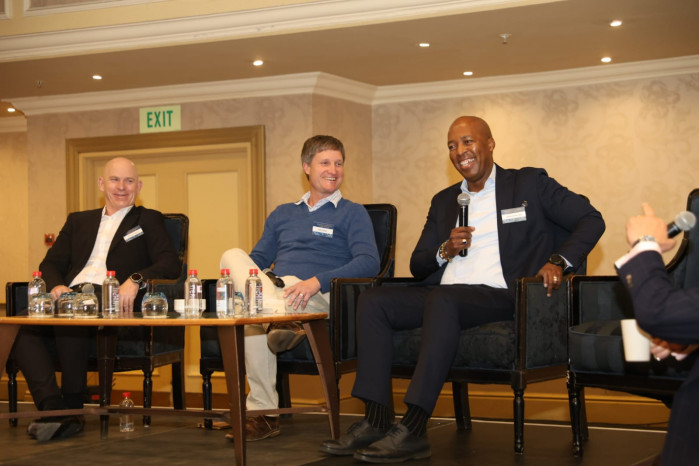
The hospitality industry is changing faster than ever, and the businesses best positioned to thrive will be those that learn to adapt rather than wait for certainty.
That was the central message emerging from the fourth annual Hospitality Industry Think Tank, held on 31 July 2026 at Emperors Palace in Johannesburg. Now firmly established as a key gathering for Southern Africa’s tourism and hospitality sector, the event brought together leading voices from hotel operations, technology, industry associations, sustainability and youth development to examine the forces shaping the future of the industry.
The Think Tank opened with a keynote address by Johnny Goldberg, Chairman of Global Business Solutions, who explored artificial intelligence, innovation and the transformation of hospitality. His message was clear: “AI won’t replace your job, but someone using AI will.”
Five panel discussions followed, covering leadership and adaptability, technology and AI, industry collaboration, sustainability and youth development.
Adding a strong social-impact dimension to the event, all proceeds from the day, including the evening’s Oracle-themed Gala Dinner, go towards Touching Dreams, the non-profit organisation that channels industry support into community empowerment, conservation and youth employment initiatives, including Reach for a Dream, the Endangered Wildlife Trust and the Touching Dreams Think Big Academy.
Drawing on the keynote and panel discussions, here are six key takeaways for hospitality and tourism businesses.
1. Leadership means creating hope and anticipating change
The opening panel, facilitated by Dimitris Manikis from Wyndham Hotels & Resorts and featuring Johnny Goldberg, Mokwena Morulane from Cresta Hotels, Nick Dickson from Dream Hotels & Resorts and Jacob Messina from Stayntouch, examined what it takes to lead an industry evolving at an unprecedented pace.
The message was that businesses which anticipate change will always be better positioned than those that simply react to it. Leadership was framed not only as decision-making, but as creating hope and confidence even when the road ahead is uncertain.
A strong theme throughout the discussion was Ubuntu – the essence of African hospitality. Panellists highlighted the importance of showcasing the continent’s distinctive warmth, strengthening regional collaboration and unlocking the potential of African tourism through authenticity and community.
2. AI is changing hospitality – and the industry needs to catch up
Artificial intelligence was one of the defining themes of the Think Tank, with both the keynote and technology panel returning to the growing gap between those embracing AI and those still watching from the sidelines.
Johnny Goldberg noted that Artificial General Intelligence may be closer than many realise, while only a small percentage of hotels currently have an AI strategy in place – highlighting the urgency for the industry to catch up.
Rather than replacing the human element of hospitality, AI was positioned as a tool that could free people to focus on what technology cannot replicate: personalised service, meaningful guest interactions and the human connection that builds loyalty.
AI is also beginning to change the way travellers discover hotels and hospitality experiences. The technology panel, featuring Samantha Williams from Profitroom Ltd., Sarah Marron from Aven Hospitality, Janine Louw from Profitroom Ltd., Jacob Messina from Stayntouch and Chris Snyman from Dream Hotels & Resorts, explored how properties that are absent from AI-driven recommendations risk losing potential bookings before a guest even reaches their website.
The takeaway was not simply to adopt AI, but to understand how it is changing discovery. While AI may help a property earn a place on a traveller’s shortlist, trust, authentic content and a seamless booking journey remain critical to converting that interest into a booking.
3. Sell the destination, not just the room
For hotels, the opportunity extends well beyond room revenue.
The technology panel challenged hoteliers to consider the complete guest journey, incorporating spa treatments, dining, tours and curated local experiences rather than treating them as secondary purchases.
The winning approach, they suggested, is a connected and frictionless experience in which technology supports rather than complicates the journey. Rich content, authentic reviews and genuine local flavour all play a role in helping guests discover and choose experiences.
At the same time, effective change management is essential. New systems only deliver value when both staff and guests understand them and are willing to embrace them.
4. Industry associations are stronger when members show up
The associations panel, facilitated by Dave Milne from Peermont Hotels and TBCSA, brought together David Frost from SATSA, Michael Hagemann from FEDHASA, Miguel Martins from SASTRA and Shaun Lamont from VOASA for a candid discussion about advocacy and collaboration ahead of South Africa’s municipal elections.
The panel pointed to visa reform, the Trusted Tour Operator Scheme, destination safety initiatives and international marketing campaigns as examples of what can be achieved when industry associations work together rather than in silos.
But membership alone does not create value. Hospitality businesses were encouraged to contribute their expertise, participate in committees and play an active role in shaping the issues that affect the sector.
Stronger public-private partnerships, greater transparency and ongoing dialogue with government were identified as critical to unlocking further growth. The panel also stressed the importance of “growing the pie rather than fighting over the slices”, together with the need for alignment around a single, compelling message to attract more international visitors to South Africa.
5. Resilience starts with data
The sustainability panel, facilitated by Dimitri Syrris of Baotree and featuring Nick Konstandoudakis of SATIB, Deborah O’Connor of BDO, Fabio Nava of CBRE Excellerate and Carl Coetzee of ERO, moved the climate conversation from principle to practical action.
Credible ESG data was positioned as a foundation for better decision-making, while also helping businesses access growing pools of sustainability-linked green finance and improve transparency in reporting.
With floods, droughts and wildfires increasing the risks faced by the industry, operators were encouraged to move from reacting to disasters towards proactive preparation. Maintenance, fire prevention and water management were highlighted as some of the most effective tools available.
Resilience, however, is not simply a technology issue. Training teams and developing a culture of preparedness are equally important. Panellists also stressed that environmental risks rarely respect property boundaries, making collaboration between neighbouring properties and local authorities essential.
6. Investing in young people means investing in hospitality’s future
The final panel turned the focus towards the communities that support the hospitality industry.
Facilitated by Chris Godenir from Touching Dreams, the discussion highlighted how sponsorships, tickets and donations connected to the Think Tank and its Gala Dinner contribute directly to the Touching Dreams Think Big Academy, a hospitality learnership programme for unemployed South Africans aged 18 to 28.
Following an initial intake of 20 learners in 2025, the programme has expanded to place 100 learners into workplaces across the country during its 2026/27 cycle.
Nonkululeko Sithole of Dream Hotels & Resorts, Natasha-Lee Shunmugam of Touching Dreams and Sipho Claassen of Boundless Group joined current Think Big Academy learners Mureesha Smith and Lesedi Molefi on stage to share how the programme is creating pathways to education, skills development and meaningful employment.
Collaboration will shape what comes next
Across the five panels, one message emerged consistently: no single hotel, brand or industry association can navigate the pace of change alone.
Whether the challenge is artificial intelligence, climate risk, increasing global uncertainty or youth unemployment, the opportunity lies in working together – across companies, associations and government – to build a stronger, more adaptable and more inclusive hospitality industry.
For an industry built on people, places and experiences, the future may be increasingly shaped by technology. But the Think Tank made one thing clear: collaboration, authenticity and human connection will remain at the heart of hospitality.
About the Hospitality Industry Think Tank
The fourth annual Hospitality Industry Think Tank took place on 31 July 2026 at Emperors Palace in Kempton Park, Johannesburg, under the theme “Oracle: A Senate of Visionaries Shaping the Future Together.”
Launched by Dream Hotels & Resorts in 2023, the Think Tank has grown into a key event on the hospitality calendar, bringing together hoteliers, technology providers and industry associations to debate the challenges and opportunities facing hospitality and tourism.
This year’s event was held in collaboration with Wyndham Hotels & Resorts, Profitroom Ltd., VOD Group, Assa Abloy, SATIB, Stayntouch, Aven Hospitality and RCI, and in association with SATSA, TBCSA, FEDHASA, VOASA and SASTRA. Other sponsors included Boschendal Wines, South African Breweries (SAB), Legacy Hotel Group, Beekman Group, Dream Hotels & Resorts, Valor Africa, Sondela, Club Mykonos, DGB and Peermont Hotels, Casinos and Resorts.
All proceeds from the day and accompanying Gala Dinner benefit Touching Dreams.